Lalibela
3 Days, 2 Nights
A Wonder of the World, carved from the living rock of the Ethiopian highlands, Lalibela is one of those rare places that defies description — and exceeds every expectation.
Price
From 515
Quota
Per person (Based on a group of 2 people). * Prices subj to availability & seasonal/holiday price increases
Overview
There are places in the world that stop you in your tracks. Lalibela is one of them. Eleven churches, hewn directly from the pink volcanic bedrock of the Ethiopian highlands in the 12th century, connected by tunnels and passageways, still in daily use as places of worship after nearly a thousand years. No cranes, no construction from the ground up — these buildings were carved downward, out of the solid rock, by hand.
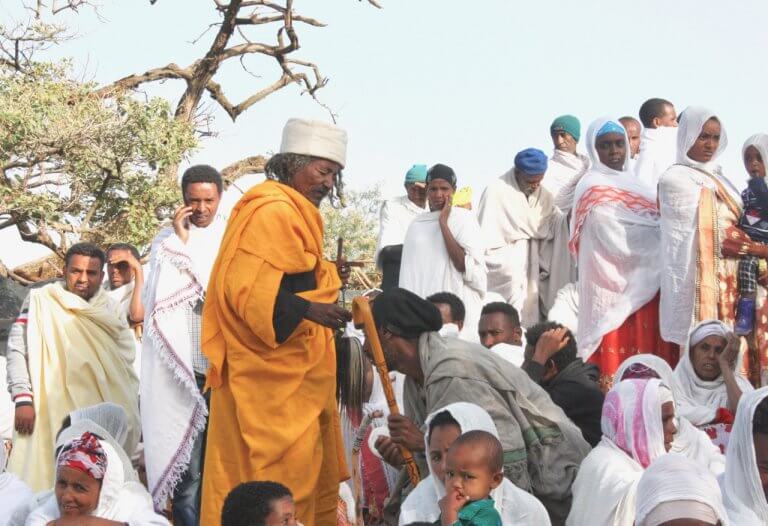
But Lalibela is not simply an archaeological wonder to be admired from a distance. It is one of the most important living holy sites in the Ethiopian Orthodox world, a place of deep, active faith where devout Ethiopians aspire to make a pilgrimage at least once in their lifetime. To visit is to step into a world where the ancient and the living are inseparable — where priests in white robes move through rock-cut passageways between churches that have stood since the time of the Crusades, and where the sound of chanting drifts up from courtyards that have heard it for eight centuries.
Come here and you will not forget it.
The Churches
The eleven rock-hewn churches of Lalibela are divided into three clusters, each connected by trenches, tunnels, and passageways that reward slow, exploratory wandering. Bring a torch for the darker passages — and bring time. This is not a site to be rushed.
The Northern Cluster
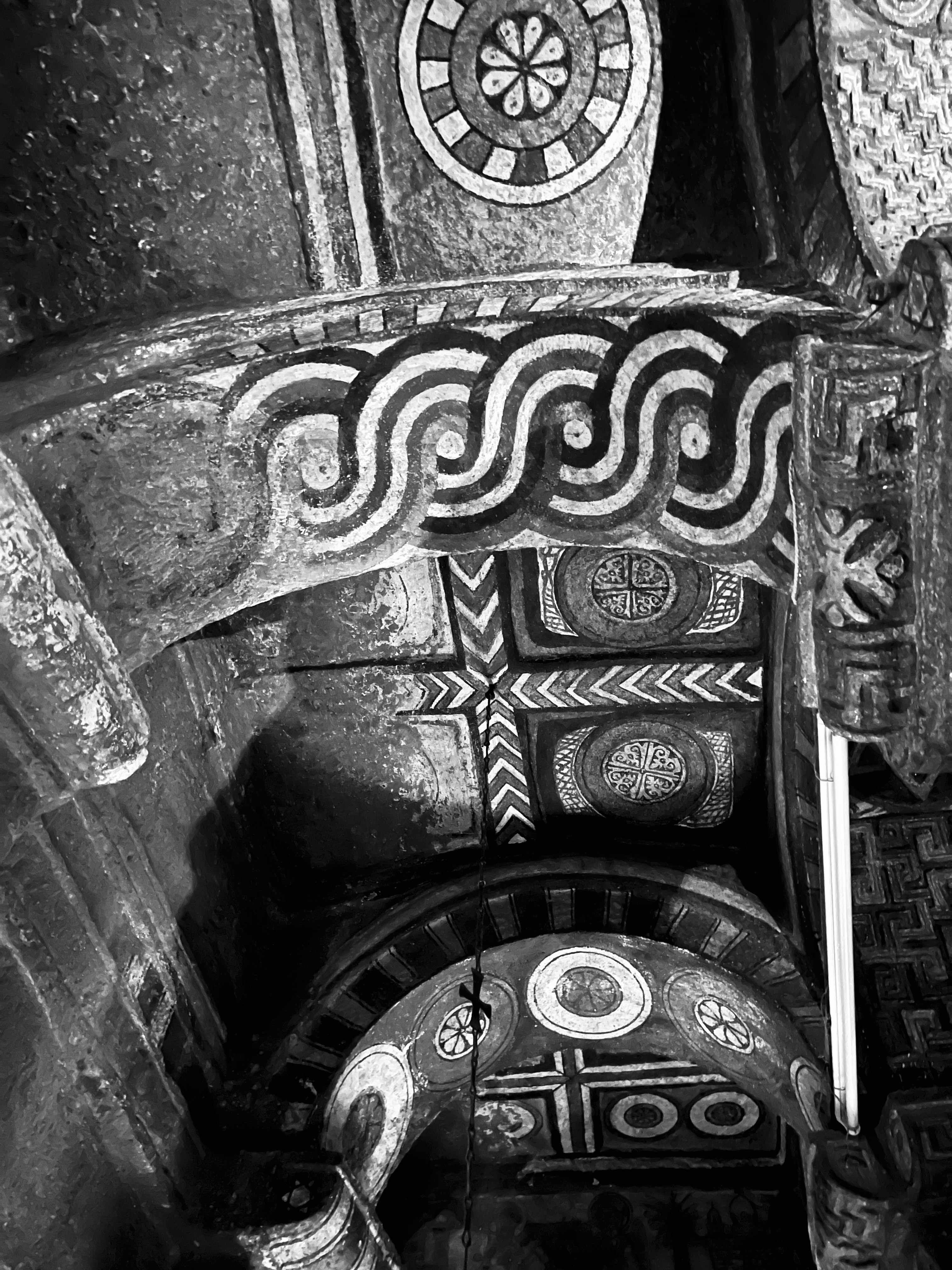
The heart of Lalibela, and the natural starting point. Bete Medhan Alem — House of the Saviour of the World — is the largest rock-hewn church on earth, set in its own vast courtyard and immediately overwhelming in scale. A short tunnel connects its courtyard to that of Bete Mariam, a church of great beauty and intimacy, with intricate relief carvings and painted interiors that reward close attention.
Beyond, through carved trenches, lie the twin churches of Bete Mikael (also known as Debre Sina) and Bete Golgotha — the latter the burial place of King Lalibela himself, though its interior is accessible to men only. On the sides of Mariam's courtyard sit two atmospheric side chapels: Bete Meskal (House of the Cross) and Bete Denagil (House of the Virgins), dedicated to fifty nuns martyred in the 4th century by the Roman Emperor Julian the Apostate. Above Debre Sina and Golgotha, carved into the rock above, is the enigmatic Tomb of Adam — a place of quiet mystery with a fine view down to the western entrance of the complex.
The Eastern Cluster
Cross the trench known as the River Jordan — Lalibela's symbolic division between the two main groups of churches — and the atmosphere shifts. The eastern cluster is darker, more labyrinthine, more mysterious. A torch is essential.
The twin churches of Bete Gabriel and Bete Rufael appear first, seemingly fronted by a dry moat and reached by a narrow bridge — a dramatic approach unlike anything else in the complex. Through tunnels, passing Bethlehem where the bread for mass is still prepared daily, you emerge at what many consider the finest church of all: Bete Emmanuel, with its soaring interior and extraordinarily refined carving.
Further around the passageway lies Bete Merkorios — partially collapsed, but home to one of the most remarkable objects in the entire complex: an exquisite medieval wall painting depicting the Passion of Christ in a series of panels, faded but deeply expressive, and among the oldest surviving paintings in any Ethiopian church.
The cluster ends at Bete Abba Libanos, carved into a sheer rock face with its roof still attached to the living bedrock and its sides excavated all the way around. It is a finely carved and surprisingly luminous space, with a mysterious source of light filtering through the ceiling that no one has entirely explained.
From Abba Libanos, climb up to Debre Zeit — the Mount of Olives — for a panoramic view across the entire layout of the churches: the best vantage point in Lalibela, and a moment that puts the full scale of what was achieved here into perspective.
Bete Giyorgis — The Iconic Church
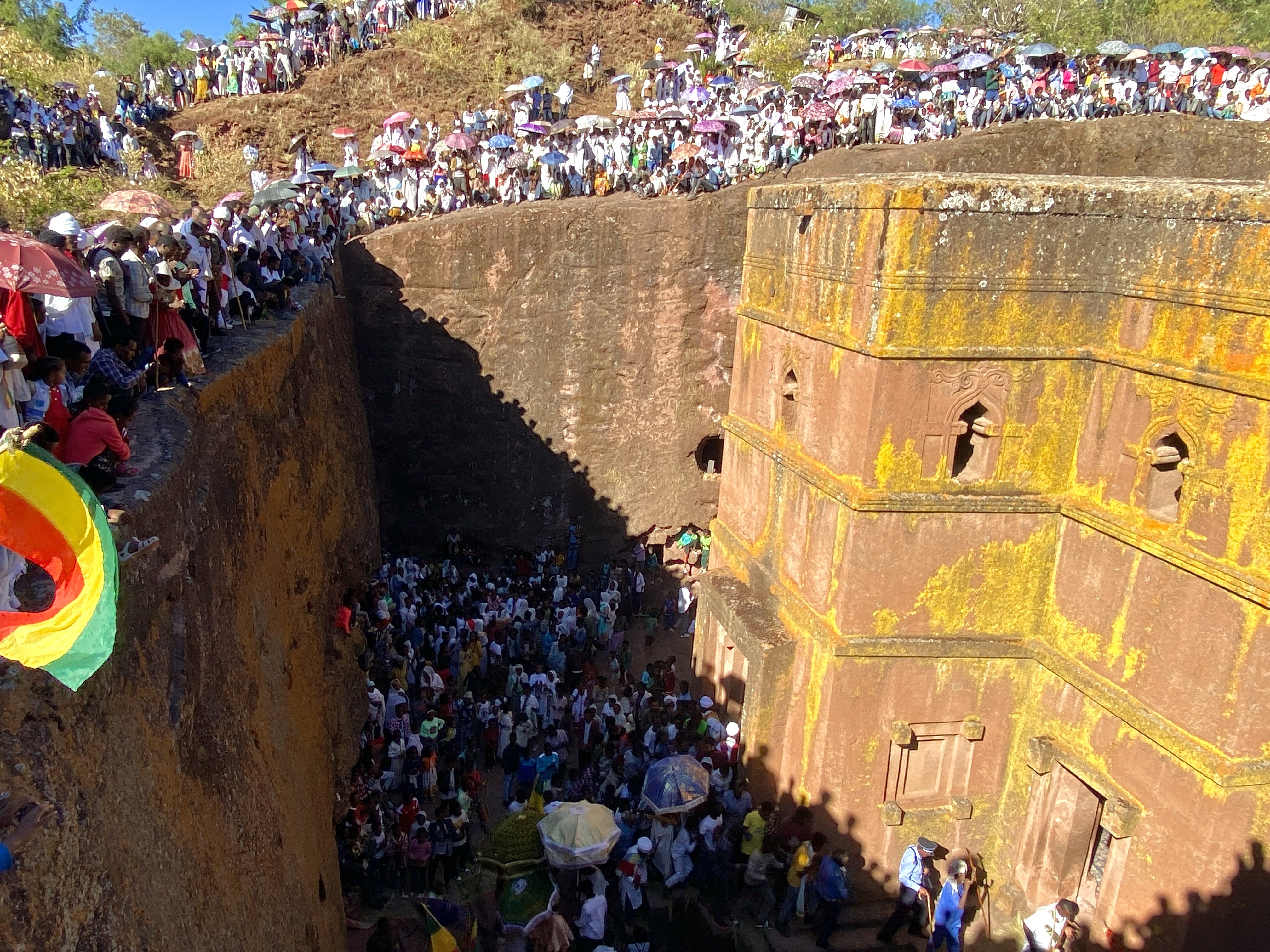
Standing alone to the west of the main complex, without the protective modern roofing that shelters the other churches, Bete Giyorgis — the House of St George — is the most celebrated and most photographed church in Lalibela, and justifiably so.
Cruciform in plan, set in a deeply excavated courtyard of its own, and accessed by a long sloping trench, it is a work of breathtaking precision and geometric beauty. The exterior, carved with interlocking crosses on every face, seems almost impossibly perfect for something made entirely by hand from solid rock. Stand at the edge of the courtyard and look down — it is one of the great sights of Africa.
Beyond the Churches
The experience of Lalibela extends well beyond the rock-hewn complex itself. Across the road from the main churches, a cluster of traditional stone houses with thatched roofs — two-storey, round, and beautifully built — offer a glimpse of the historic domestic architecture of the highlands. A wander through the back passageways of the church complex, away from the main tourist routes, reveals quieter corners where the devotional atmosphere is palpable. Sit for a while, listen, and let the place speak.
On Saturdays, the weekly market is a vivid and rewarding addition to any visit — one of the most colourful and authentic in the highlands.
Churches Outside Town
Several remarkable churches lie within reach of Lalibela for those with time and energy to explore further.
Neakutaleab, a built church set within a cave just outside town, is easily reached by tuk-tuk and a short walk, and houses a fine collection of ancient treasures. Ashetan Mariam, higher up in the mountains above the town, can be reached by road or on foot — a rewarding hike with sweeping views across the highlands.
North of the town, the village of Bilbala contains two rock-hewn churches worth seeking out. Bilbala Cherkos is one of the oldest and most atmospheric in the region, set just beyond a small wooded area that conceals it entirely from the road. Bilbala Giyorgis is a longer and tougher hike, sometimes visited en route to the remarkable Yemrehana Kristos — a beautifully constructed church built inside a cave in the ancient style of Debre Damo, one of Ethiopia's oldest architectural traditions.
Please note: access to Bilbala and Yemrehana Kristos depends on the current security situation. We will advise you closer to your visit.
Festivals and Holy Days
Lalibela is extraordinary at any time of year. During its great festivals it is transcendent. If your dates allow, planning your visit around one of the following will add an unforgettable dimension to the experience.
Gena — Ethiopian Christmas (7 January) The most important day in the Lalibela calendar. King Lalibela's birthday falls on Orthodox Christmas, making this festival uniquely significant here. The churches fill with white-robed worshippers, chanting fills the courtyards through the night, and the atmosphere is unlike anything else in African travel.
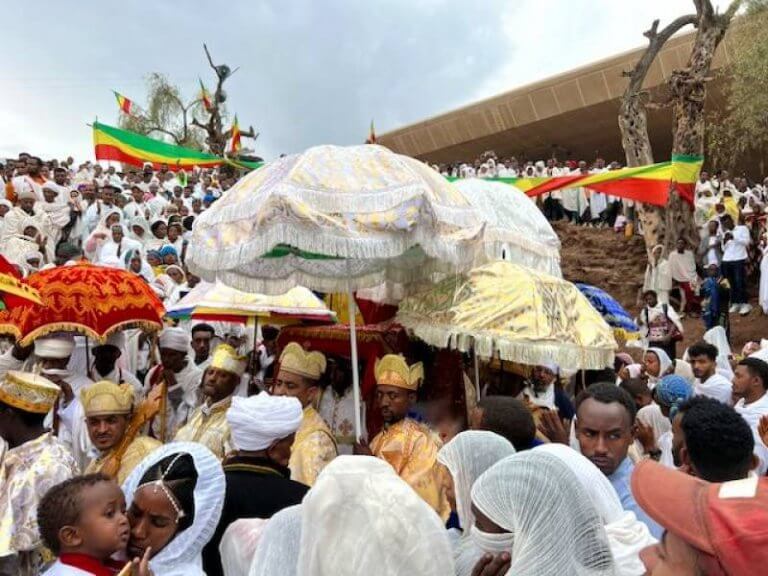
Timkat (18–20 January) The three-day celebration of Christ's baptism in the River Jordan is one of the great spectacles of the Ethiopian Orthodox year, with processions, ceremony, and colour on each of the three days. The final day honours the Mikael Tabots, and Lalibela's celebration is among the most important in Ethiopia.
Sebreatsemu Giyorgis (26 January) A celebration unique to this region of Ethiopia — the feast of St George observed in a form found nowhere else in the country. A fascinating and intimate insight into local religious tradition.
Senay Mikael (19 June) The second most important saints day in Lalibela after Gena, marking both a Mikael celebration and the anniversary of King Lalibela's death.
Easter (Good Friday to Easter Sunday) Orthodox Easter — which usually falls on different dates from western Easter, though it coincides with Greek, Russian, Armenian, and all other Orthodox churches — is celebrated with particular intensity in Lalibela. Being here from Good Friday through to Easter Sunday is a profound and moving experience.
There are many other important saints days, please ask us. Tesfa Tours have become experts on the various saints days in the calendar, and produce an annual Ethiopian Orthodox calendar covering all major festivals and saints days.
Getting There
By air: Ethiopian Airlines operates daily direct flights from Addis Ababa to Lalibela (approx. 1 hour 15 minutes). Connections to and from Gondar are usually available 5 days a week. Flight schedules can change at short notice — we will confirm current timings when booking your itinerary.
On arrival: The airport sits 20km from town, connected by a winding asphalt road that descends dramatically through highland scenery. With flights typically arriving late morning, most visitors have time to begin exploring the first cluster of churches on their arrival afternoon.
Our Recommendation
Two nights in Lalibela gives you the time to do justice to both the main church complex and the outlying sites, with space to wander, sit, and absorb the atmosphere rather than simply tick off a list. If your visit coincides with a Saturday market or a major festival, allow an extra day — you will not regret it.
Travel Plans
Get a Quote for
Short trip to Lalibela - Ethiopia's most iconic destination