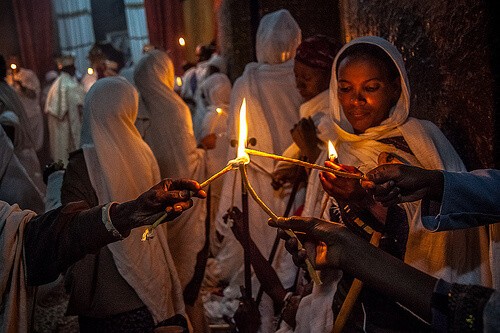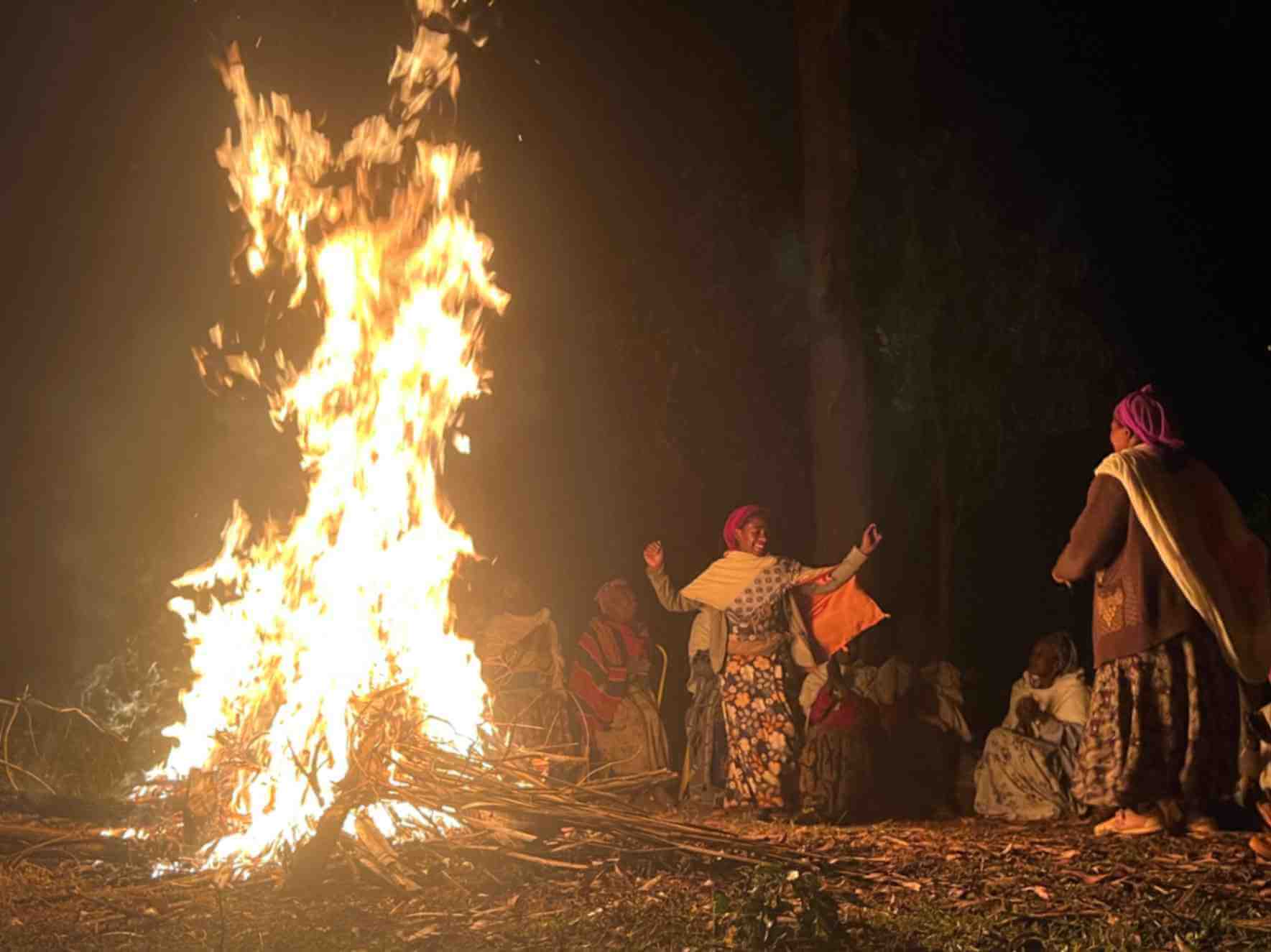
We wish everyone a happy 2018 as we approach the Ethiopian New Year – Enkutatash as it is known here.
As some of you will know and others are discovering, much in Ethiopia is different from everywhere else in the world. And the calendar here is one such difference. The Ethiopian Calendar is a Julian Calendar – a system named after Julius Caesar with 12 months of 30 days and a pagumenical month which in 3 years out of 4, is 5 days long – an extra 6th day coming on leap years.
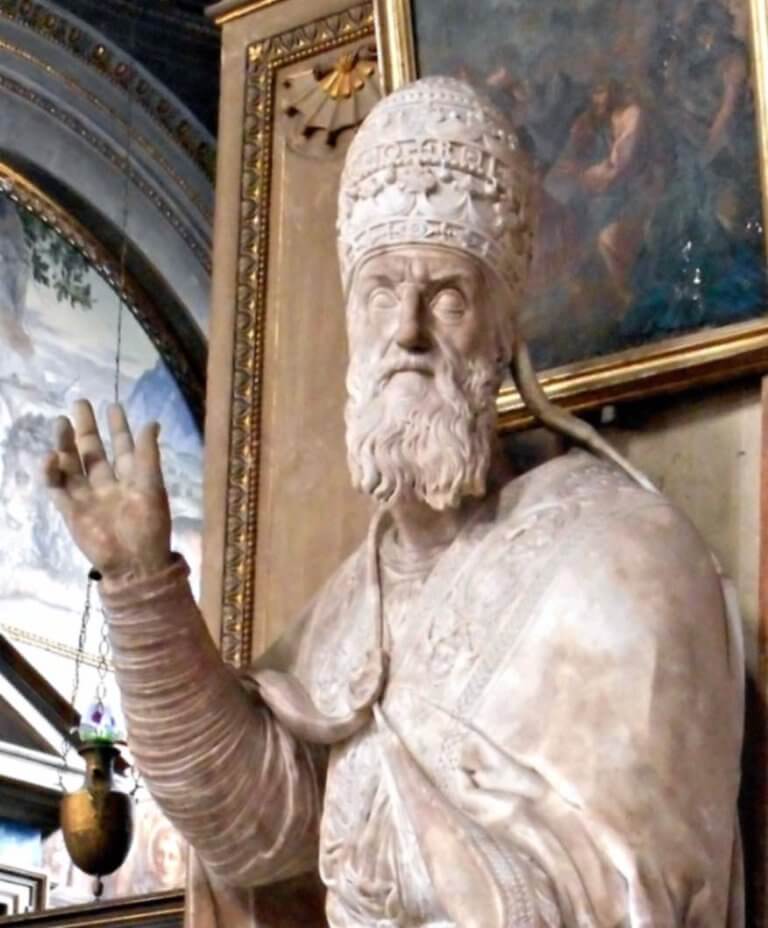
Pope Gregory XIII (1572-1585) – statue by Pietro Paolo Olivieri – Aracoeli Church in Rome
Much of the rest of the world operates on a Gregorian Calendar, which Pope Gregory XIII introduced in the 16th century. Bizarrely across Catholic Europe Thursday 4th October 1582 was followed by Friday 15th October. Imagine if you were planning to celebrate a birthday or anniversary in the intervening 11 days! Many countries did not follow this, so across Europe people were working on different calendars for years, even centuries. Britain finally caught up 200 years later when Wednesday, 2nd September 1752, was followed by Thursday, 14th September.
Ethiopia has kept its Julian Calendar, however, this did not just differ by days but by years. Ethiopia’s calendar seems to have its origins in the time of the Pharaohs, when the new year marked the inundation of the Nile. The Nile passing through Egypt reached the high water mark in late August, and most of this water came from the rains experienced in the Ethiopian Highlands during the rainy season (kremt).
Over the millennia the minor inaccuracy in the Ethiopian Calendar has meant that this date moved forward to September 11th, which is when Ethiopia currently celebrates New Year!
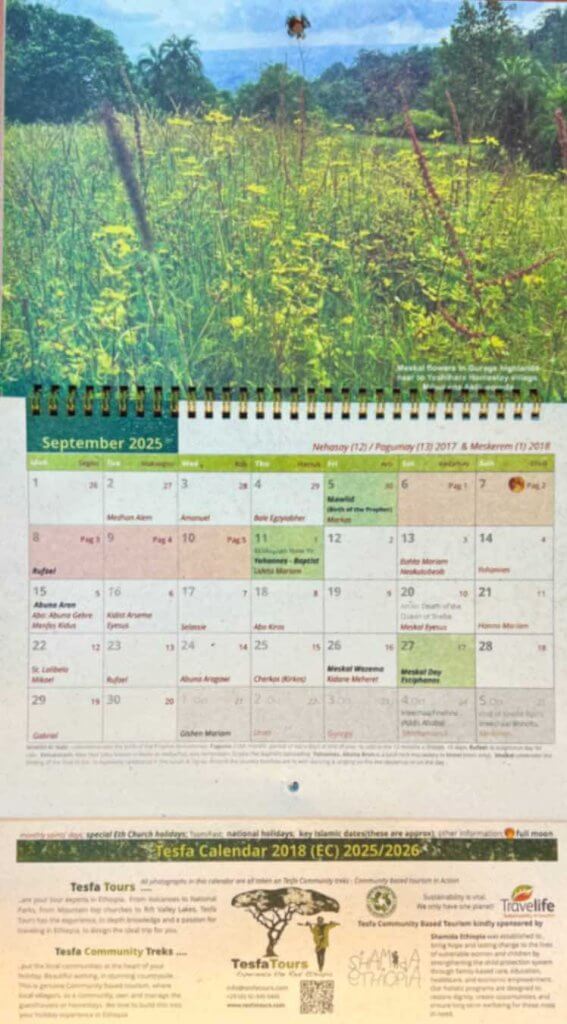
Calendar details from 2018 EC
How the calendar came to be taken up in Ethiopia is a mystery lost in the mists of time, along with the presence of the sistrum in the church and the Falasha people, that until recently were spread across much of the north west of the country.
To explore and understand the full splendour of the Ethiopian Calendar contact us to get the wall hanging calendar or diary version of this epic calendar (see images here). You will see the monthly recurring saints days, annual celebrations, special holidays, fasting times; all carefully interwoven with Islamic holidays (that have a lunar element of unpredictability) and national days. As this is all displayed with western and Ethiopian dates clearly marked, it is an essential tool for living here and understanding much of what is going on.

2018 Ethiopian calendar
Available in Addis Ababa at our offices and through various kind people who have a stock. Contact us to see where your nearest copy is!
Meanwhile enjoy the holiday celebrations!